Great companies aren't built by great products.
They're built by great decisions — driven by purpose, with clarity, with courage; even under
uncertainty and pressure.
Steve Jobs, 1984 — with the original Macintosh
Not a parade of instant hits. A series of brave bets — many initially panned — that became the defining products of our era.
Click any decision to open the thought leaf — a window into the mind of the greatest product decision-maker of our time.
History records what Jobs decided. But the real story is how he decided — the emotion he metabolized, the conventional wisdom he rejected, the strategic insight hiding behind what looked like instinct.
That's what decision intelligence reveals. Not the Wikipedia version. The real version — at 2am, when the choice was still alive and uncertain.
Apple was never one person's story. Three fundamentally different decision-makers — combined at the right moment in history to build something none could have built alone.
Jobs died in 2011 — 14 years before AI became the defining platform shift of a generation. But his pattern of thinking is well-documented. Here's how he would have engaged with the most important technology moment since the iPhone.
"I've reviewed the competitive AI landscape. Here are my thoughts:
Microsoft has shipped an AI that apologizes for existing every third sentence. We will not do that.
Google has shipped an AI that answers every question with four more questions, two disclaimers, and a suggestion to consult a professional. We will not do that either.
OpenAI has named their models o1, o2, o3 — and somehow GPT-4o-mini-turbo. I have no idea what any of that means. Neither do they. Moving on.
Adobe spent thirty years teaching the world to create. Then they tried to buy their biggest competitor, failed, and now offer AI that generates images nobody asked for inside software designers already paid for. We take note. We do the opposite.
Anthropic's Claude — I will admit — is doing something interesting. It reasons. It shows its work. It occasionally writes code that actually runs. If we were building an AI, I would study this one carefully. Then I would make it invisible and call it something else entirely.
Everyone else has shipped something called an 'AI assistant.' We are not building an assistant. Assistants wait to be asked. We are building something that already knows.
Also — if I see the phrase 'AI-powered' on any Apple product, prototype, press release, or Keynote deck, the person responsible will be building something else. From home. Permanently.
That is all."
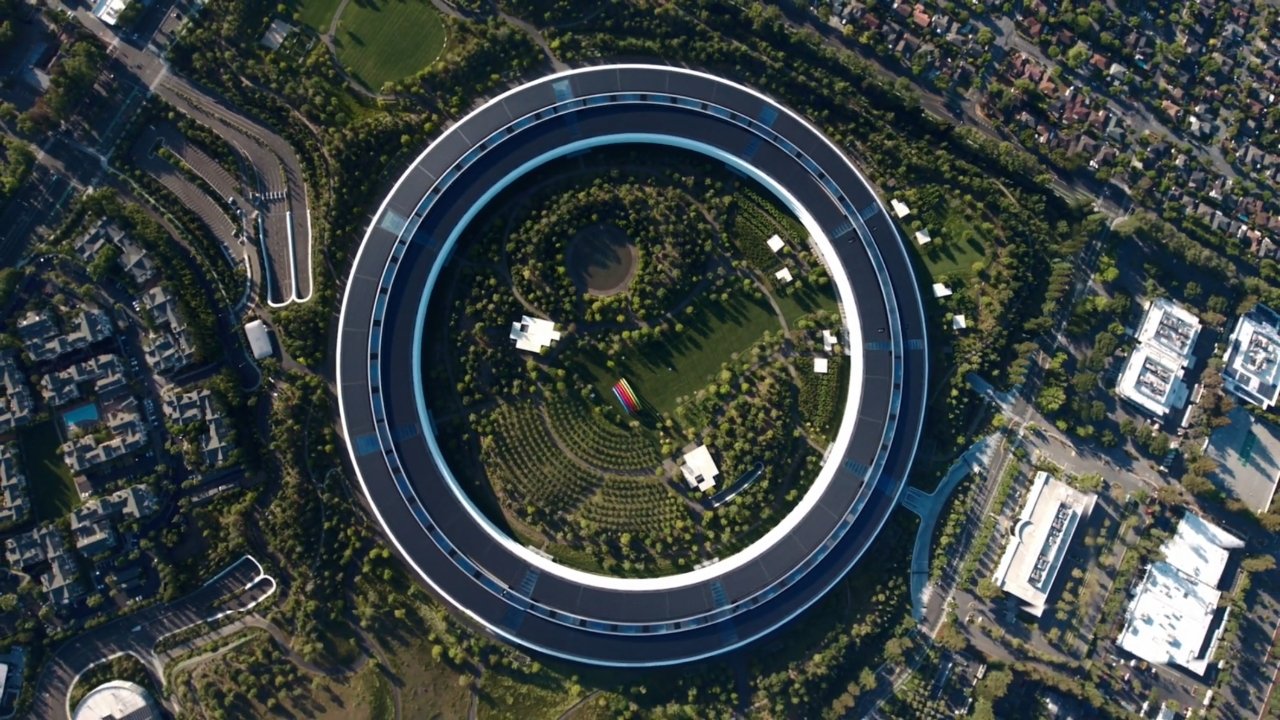
Apple Park, Cupertino — where decisions become products
Apple didn't succeed because Jobs was a genius. He succeeded because at every critical inflection — exile, return, the music bet, the iPhone — he made the right decision with purpose, clarity, and conviction.
Steve Jobs had instinct, conviction, and decades of pattern recognition. You might not — but you can have a structured framework that gives you the same kind of clarity. That's what MapMyDecision is built for. Not to tell you what to decide. But to give you the framework and the honest mirror to make your most important decisions well.